

Circumferential Seals
Circumferential seals are designed to minimize the leakage of fluid or gases by either sealing directly against the shaft or by using a closely controlled clearance with the rotating shaft or other moving parts which creates an energy efficient seal.
Circumferential seals also have a longer lifespan and require less maintenance compared to traditional mechanical seals.
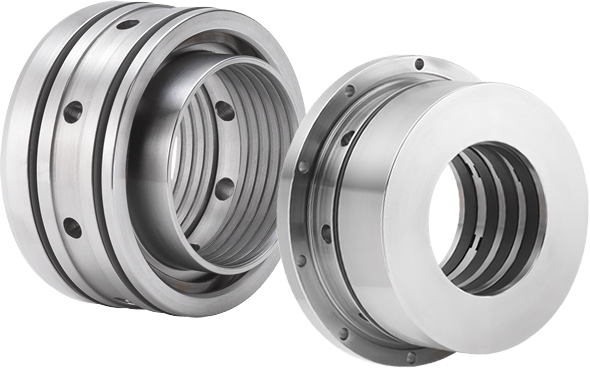
Seal Types
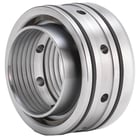
Windback
When working with “oil-free” rotary screw compressors or any other oil-free rotary machines, our windback seals are ideal.
FEATURES
- Zero power dissipation
- Windback seal utilizes shaft boundary layer to seal process oil or gas.
- Gas purge option.
- Typical uses include vacuum pumps, blowers, compressors, and other rotating equipment
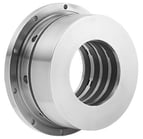
Carbon Solid
Carbon solid seals are an ideal long-term solution for a variety of applications and industries.
FEATURES
- Retainer utilized for axial sealing inside the groove.
- Non-contacting, segmented,self-aligning carbon rings for controlled leakage.
- Face load 50-75% less than spring seal
- Short axial length
- Reduced friction on seal face lowers heat and wear resulting in longer seal lifespan
PARAMETERS
- Pressure: Vacuum to +290 psi abs
- Temperature: -184 ̊F to +400 ̊F
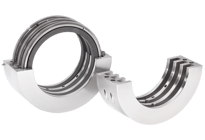
Carbon Split
The carbon split seal, which splits into two halves for easier replacement, is an easy-to-install, long-term solution for a number of industries.
FEATURES
- Retainer utilized for axial sealing inside the groove.
- Split housing for easy installation
- Non-contacting, segmented, self-aligning carbon rings for controlled leakage.
Parameters
- Pressure: Vacuum to +290 psi abs
- Temperature: -184˚ F to +400˚ F
- Speed
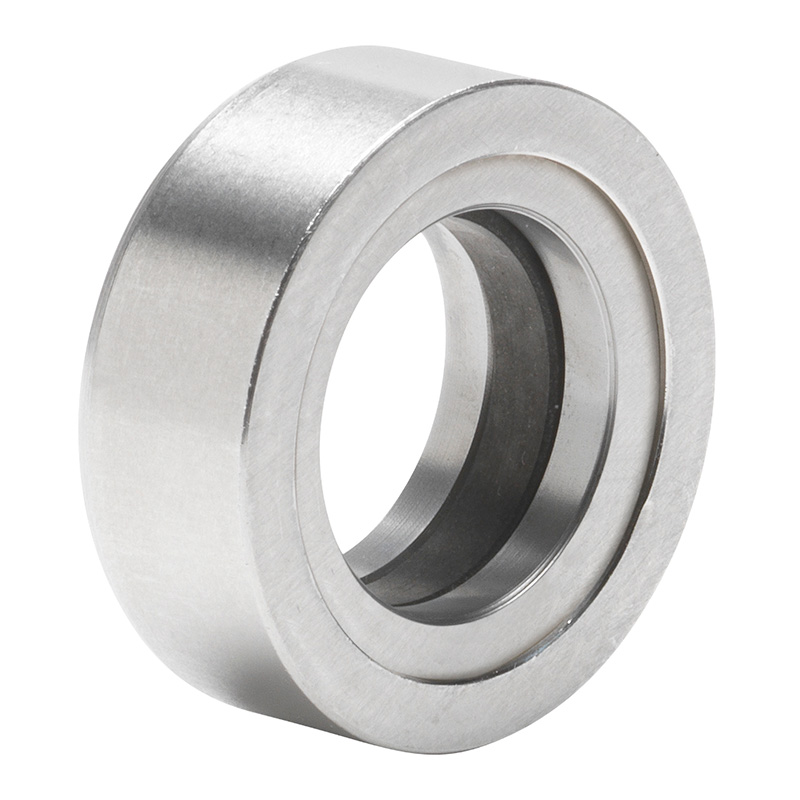
Carbon Floating
Our carbon floating seals are a dependable option in instances when mechanical seals reach their limits.
FEATURES
- Retainer utilized for axial sealing inside the groove.
- Non-contacting, segmented, self-aligning carbon rings for controlled leakage.
Parameters
- Pressure: Vacuum to +290 psi abs
-
Temperature: -184 ̊F to +400 ̊F
-
Speed
Custom solutions
While OEM seals suffice for some applications, many use cases require custom sealing solutions.
Whether you need a seal that meets specific performance requirements or can withstand extreme operating conditions, Ergoseal offers the in-house design and rigorous testing expertise to ensure your custom seal meets your precise specifications and performs in even the most demanding environments.


Have a project? Tell us how we can help.
If you have a question about our products or need help with a custom sealing solution, we'd love to hear from you. Give us a few details regarding your project and we'll be happy to help.
