PTFE vs. Elastomers vs. Hybrid Seal Materials: When Each One Wins
Key Takeaway: Which seal material should you use — elastomer, PTFE, or spring-energized hybrid?
There's no universal best seal material — the right choice depends on weighing your application's media, temperature range, speed and pressure, service-life target, gland design, and cost together, rather than defaulting to whatever you used last time. The checklist below walks through each factor so you can see where your application actually lands.
The “best” seal material doesn’t exist in isolation; it only exists relative to the operating envelope you’re actually running.
In This Article:
- Elastomer Seals Win When...
- PTFE Wins When...
- Hybrid (Spring-Energized PTFE) Wins When...
- Quick Decision Checklist
- Don't Guess — Validate
- FAQs
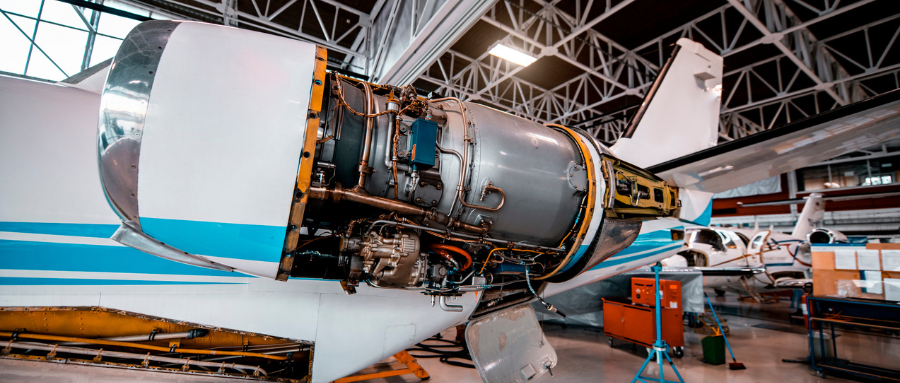
If you guess wrong on a seal material, the bill doesn't show up as a line item — it shows up as an AOG event, a warranty claim, or a hydraulic system down for inspection. A leaking fuel seal or a hydraulic line that weeps under thermal cycling isn't a minor fix in aerospace; it's a grounded aircraft and a very expensive phone call.
This isn't a materials primer. If you want the full breakdown of elastomer, PTFE, and hybrid material families, we covered that in another blog, “Materials Matter: Choosing the Right Seal Material for Aerospace”. This post is a decision framework: given your application's real operating conditions, which material family actually wins, and why.
Elastomer Seals Win When...
Elastomers are still the right call for a large share of sealing applications, particularly when:
- The application is low-pressure, slow-motion, or largely static — think housings, covers, and connections that see minimal dynamic load.
- Misalignment, debris, or an imperfect shaft or bore finish is likely. Elastomers flex and conform in ways rigid materials can't.
- Installation conditions are rough. Elastomers tolerate handling damage — nicks, minor pinching, less-than-perfect assembly — far better than PTFE does.
- Cost and simplicity matter more than squeezing out the last margin of performance. A standard O-ring in a simple groove is cheap, well-understood, and easy to source.
A note on O-rings: O-ring describes a seal's shape, not a material family. O-rings can be molded in elastomer compounds or machined from PTFE, so the criteria above still decide which one's right, not the geometry itself. One elastomer-specific option worth knowing: pairing an O-ring with a PEEK (or similar high-modulus plastic) anti-extrusion backup ring can extend it into higher-pressure static service that would otherwise push you toward PTFE or hybrid — a simpler, lower-cost step before jumping to a different material family.
However, there is one trade-off to flag: the compression set. Over long dwell times or long service life, elastomers lose their ability to spring back and maintain sealing force — which makes them a poor fit for applications that need to hold up for decades without intervention.
PTFE Wins When...
PTFE earns its premium when the environment would degrade or overwhelm an elastomer:
- Chemical exposure is aggressive or unpredictable — fuels, hydraulic fluids, solvents, or media that cause an elastomer to swell, harden, or chemically alter over time.
- Operating temperature swings across an extreme range, from cryogenic conditions (liquid nitrogen at -320°F/-196°C, liquid hydrogen at -423°F/-253°C) to 500°F or beyond — well past the -40°F to 500°F baseline range of a standard PTFE seal.
- High speed (above roughly 5,000 fpm / 25 m/s) or high pressure (above roughly 500 psi / 35 bar) generates frictional heat that would degrade an elastomer's compound over time.
- Wear life that outlasts the component's service interval, with minimal friction, is the priority — ECUs, actuators, pumps, and other dynamic components where no scheduled seal replacement and low drag matter more than upfront cost.
“PTFE also can run dry and cooler due to a lower coefficient of friction. Also, the fact that PTFE can be filled with various fillers to adapt the material to the specific application. PTFE also does not require molding or special tooling,” notes Gerald Strenk, Ergoseal Global PTFE Product Manager.
Trade-off to flag: PTFE has no elastic memory. It doesn't spring back the way an elastomer does, so it needs an energizer to maintain sealing force, and it demands tighter shaft and bore tolerances to perform reliably.
Hybrid (spring-energized PTFE) wins when...
Spring-energized PTFE seals exist for a specific reason: to combine PTFE's chemical and thermal ceiling with a sealing load that doesn't depend on PTFE's own (nonexistent) memory. That combination wins when:
- The application needs PTFE's chemical or thermal performance, but also needs a more consistent, controlled sealing load than pure PTFE alone can provide.
- You're dealing with deep cryogenics — service below -300°F, such as liquid nitrogen (-320°F/-196°C) or liquid hydrogen (-423°F/-253°C) environments — or torque-sensitive rotary applications, where a canted coil spring keeps sealing load near-constant across wear and deflection.
- Service-life requirements are measured in decades, not years. Spring-energized seals don't suffer compression set the way elastomers do, so they hold their sealing force over a much longer horizon.
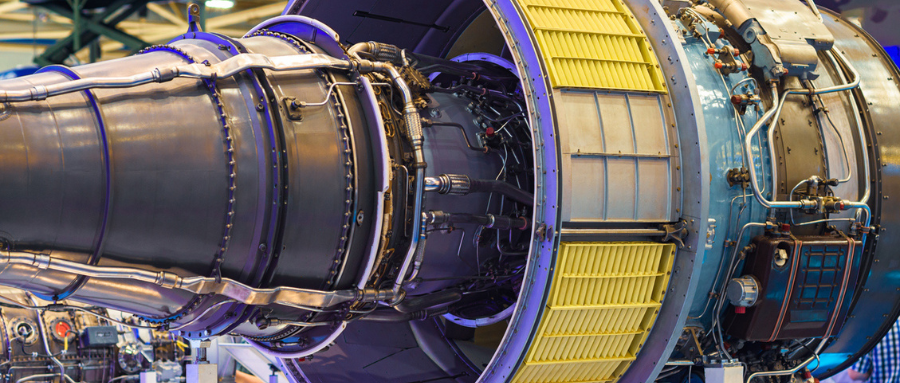
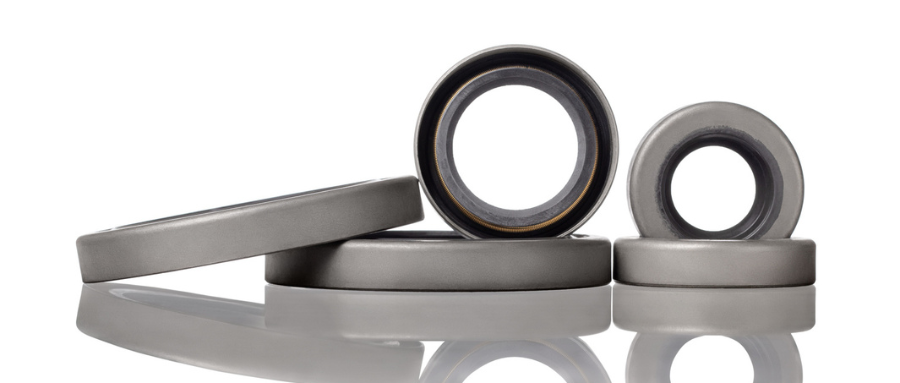
We've built this exact solution before — Ergoseal's spring-energized PTFE lip seal running on a silicon carbide sleeve and spring-energized PTFE seals purpose-built for aircraft engine applications where failure isn't an option.
There are many applications where spring-energized PTFE is the best solution:
“You could use spring-energized PTFE hybrid seals when you need PTFE's chemical and thermal ceiling plus a controlled, consistent sealing load — deep cryogenics, torque-sensitive rotary applications, or multi-decade service life,” Strenk explains. “Spring-energized seals are also recommended when the pressure exceeds 500 psi and could be used in excess of 20k psi with the correct design features.”
Trade-off to flag: hybrid seals cost more and require a more complex gland design — split or stepped, rather than a simple machined groove. This isn't a default choice. It's the right call only where the performance gap actually justifies the added cost and design complexity.
Quick decision checklist
Run your application through these six questions. Each one points toward the material family best suited to answer it:
- Media — Is the seal exposed to fuels, hydraulic fluids, or aggressive/unpredictable chemicals? Favors PTFE or hybrid.
- Temperature range — Is it a moderate, stable range, or does it swing from cryogenic to 500°F+? Moderate favors elastomers; extreme favors PTFE or hybrid.
- Speed/pressure — Is the application static or low-speed, or does it generate significant frictional heat? Low favors elastomers; high favors PTFE or hybrid.
- Service-life target — Years, or decades without intervention? Years favor elastomers; decades favor hybrid.
- Gland/design constraints — Can you accommodate a split or stepped gland, or does the design call for a simple machined groove? Simple groove favors elastomers or PTFE; complex gland opens the door to hybrid.
- Cost ceiling — Is this a cost-sensitive, high-volume application, or is the performance margin worth the premium? Cost-sensitive favors elastomers; performance-critical favors PTFE or hybrid.
If most of your answers land in one column, you have your material family. If they're split, that's exactly the conversation you should have before you commit to a design.
Don't guess — validate
The right seal material isn't a guess, and it shouldn't be treated like one. Every material decision we make runs through in-house design and testing under our AS9100D quality process, so data, not intuition, backs the choice.
If your application sits in the gray area between these three categories, talk to one of our application engineers before you finalize the design. It's a lot cheaper than finding out the hard way.
Frequently Asked Questions
What's the main difference between elastomer, PTFE, and hybrid seals?
Elastomers seal through elastic memory — they compress and spring back. PTFE has no elastic memory, so it relies on an energizer to maintain load, but it tolerates far more aggressive chemicals and temperatures. Spring-energized hybrid seals combine PTFE's chemical/thermal resistance with a mechanical spring that keeps sealing load consistent over time
Can PTFE seals handle cryogenic temperatures?
Standard PTFE lip seals are typically rated -40°F to 500°F. True deep cryogenic service — down to liquid nitrogen (-320°F) or liquid hydrogen (-423°F) — is where spring-energized PTFE hybrids take over, since the canted coil spring keeps sealing force stable even as materials contract at those temperatures.
What counts as "high pressure" or "high speed" for a seal?
For PTFE lip seals, pressures above roughly 500 psi (35 bar) and rotary speeds above roughly 5,000 fpm (25 m/s) start generating enough frictional heat to push past what a standard elastomer seal can handle.
Why would I choose a more expensive hybrid seal instead of standard PTFE?
When the application also needs a controlled, consistent sealing load that pure PTFE can't provide on its own — deep cryogenics, torque-sensitive rotary equipment, or a multi-decade service-life requirement where compression set isn't acceptable. The added cost and gland complexity only make sense when that performance gap is real.
How do I know which seal material is right for my application?
Run it through the six-factor checklist above — media, temperature range, speed/pressure, service-life target, gland constraints, and cost ceiling. If your answers are split across material families, that's a sign to validate the choice with an application engineer rather than default to what you've used before.