7 Reasons OEMs Trust Ergoseal for High-Performance Sealing
When you build equipment that must perform reliably for years — sometimes decades — your sealing components can’t be an afterthought. For OEMs, seals are not commodities; they are engineering-critical components that directly influence durability, efficiency, and system safety.
In This Blog
- Engineering Collaboration Begins Early & Pays Off Later — Early input prevents redesigns and speeds validation.
- Precision Machining & Surface Finish Control That OEMs Can Depend On — Tight tolerances deliver consistent performance at scale.
- Material Science Expertise, Especially in PTFE and Custom Fillers — Custom PTFE blends optimize friction, wear, and compatibility.
- FSAV (Feasibility Study & Advanced Verification): De-Risking Design Before Production — Front-load testing to eliminate validation surprises.
- Production Stability That OEMs Can Count On — Stable processes ensure predictable supply and quality.
- Support for Legacy Equipment — Reverse-engineer obsolete seals to extend equipment life.
- A Lifecycle Sealing Partner — Not Just a Parts Supplier — End-to-end partner from concept through aftermarket.
Across aerospace, industrial, medical, food processing, and fluid-handling applications, OEMs turn to Ergoseal when sealing performance, reliability, and long lifecycle matter most.
Here are 7 reasons why.
1. Engineering Collaboration Begins Early & Pays Off Later
Most sealing issues aren’t obvious on a print — they appear when the system is under real-world temperature, pressure, and motion cycles. That’s why Ergoseal's engineering value starts long before a design is finalized. Early collaboration enables their team to understand not just the seal geometry but also the hardware it interacts with, the lubrication environment, the dynamic loads, and the lifecycle expectations.
This proactive involvement helps OEMs avoid late-stage redesigns, unexpected friction or leakage behavior, and material mismatches that surface during testing. It’s the kind of partnership where engineering conversations replace guesswork. The result is faster validation, fewer prototype rounds, and more reliable production outcomes.
“When Ergoseal is able to collaborate at the beginning of a project, we can offer best-fit solutions for demanding applications that work correctly the first time correctly. We are able to take part in the overall design of the product, the hardware, and the sealing solution,” says Ergoseal Global PTFE Product Manager Gerald Strenk. “Based on decades of application experience and in-house testing, we have a lot of reliable data that not only looks for best seal optimization but also looks at overall product functionality and sustainability.”
2. Precision Machining & Surface Finish Control That OEMs Can Depend On
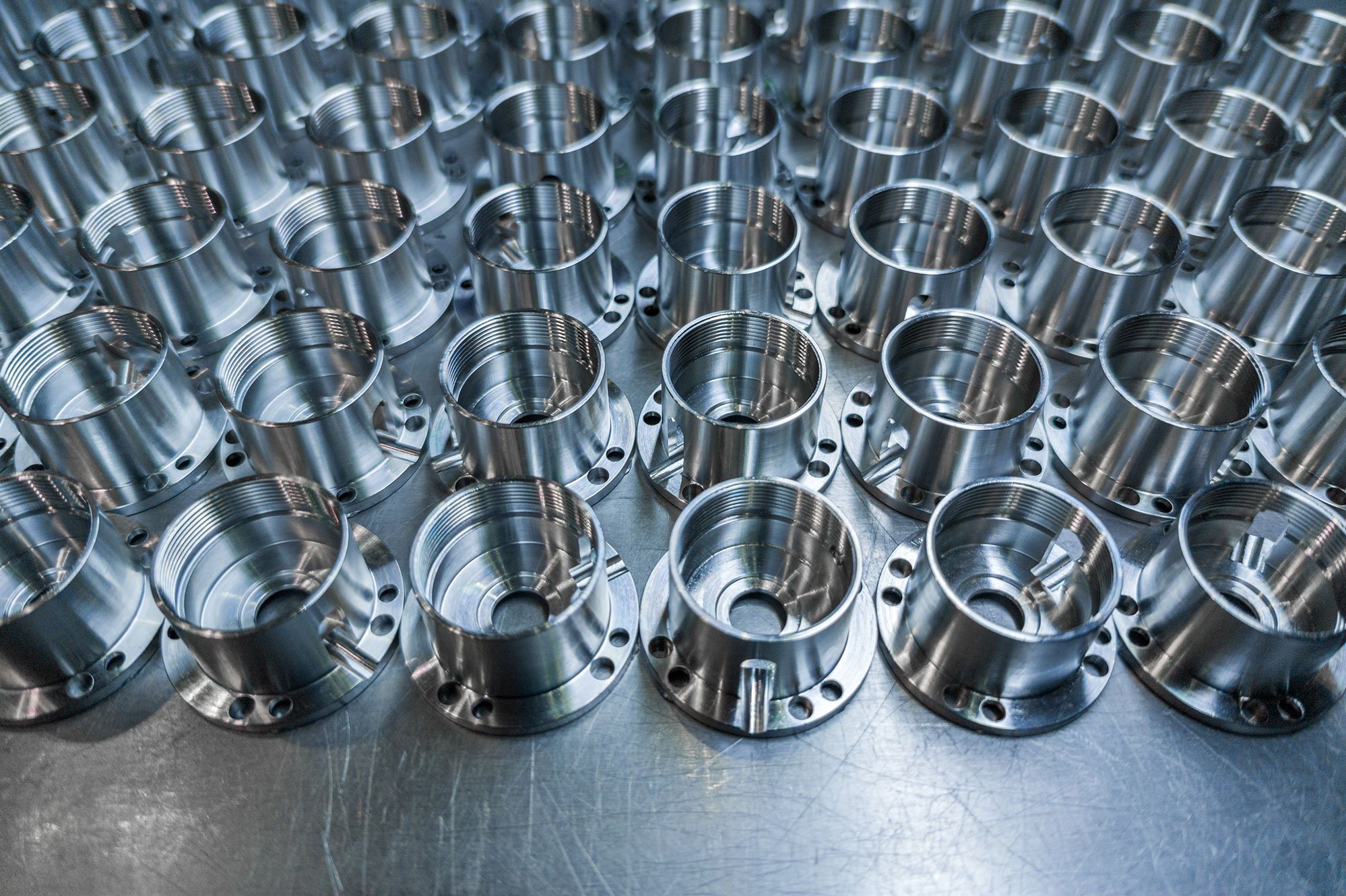
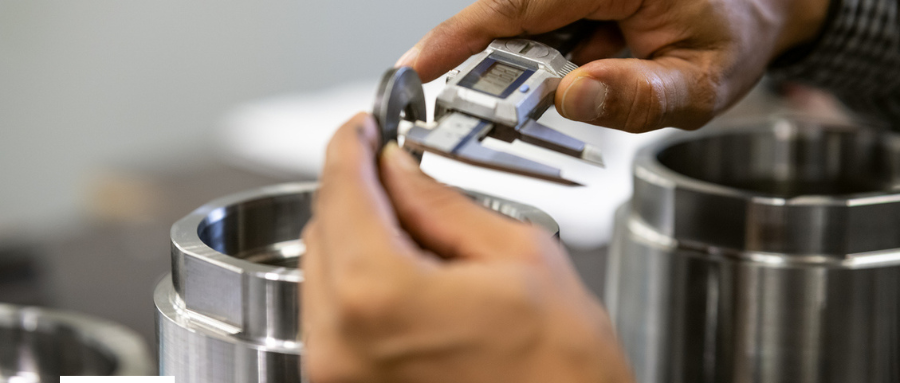
In many OEM applications, seals don’t fail because the design is wrong — they fail because something was produced slightly outside target tolerances. A few microns of mismatch in surface finish, concentricity, or geometry can dramatically alter leakage rates, friction, or wear behavior.
Ergoseal’s machining and grinding capabilities are built around these realities. They control texture direction, edge transitions, and dimensional accuracy at a level general-purpose machine shops cannot match. This precision ensures that the first seal, the hundredth seal, and the thousandth seal behave consistently under load. For OEMs, that consistency directly translates to:
- fewer qualification failures
- fewer field issues
- more predictable performance across production runs
It’s the manufacturing discipline that becomes a competitive advantage. This is precision at the part level — ensuring the seal geometry and surface finish are exactly right every time.
3. Material Science Expertise, Especially in PTFE and Custom Fillers
Material selection is often one of the most misunderstood elements of sealing. OEMs know what the system must achieve, but not always how elastomers, PTFE blends, or hybrid materials behave under dynamic conditions. This is where Ergoseal differentiates itself.
Instead of treating material selection as a checkbox, their engineers evaluate how the seal will interact with fluids, hardware, temperatures, lubrication regimes, and long-term wear mechanisms. For PTFE applications, Ergoseal’s expertise with fillers — carbon, graphite, bronze, glass, or custom blends — allows them to dial in friction, creep resistance, thermal expansion, and chemical compatibility at a granular level.
This reduces energy loss, decreases wear, and often fixes chronic issues OEMs have battled for years with standard materials. Strenk says:
“When looking at PTFE and fillers and the best material options, it is possible that most folks think that there is only one kind of exact filler or blend made one way. In reality, a compound can be customized in many ways. It is a very proprietary science. As an example, many types of PTFE virgin bases have different grain sizes, quality, and origin.
They can be organic or synthetic, and in a total blend, the percentages can be manipulated. Once a compound is blended, there is more that can be done in the manufacturing process to control the material's properties,” Strenk explains. “We can optimize the properties further through the type of material molding, how we control pressure, dwell, and the sintering cycle.”
4. FSAV (Feasibility Study & Advanced Verification): De-Risking Design Before Production
Uncertainty is one of the biggest challenges OEM engineering teams face. They need to know whether a seal will behave as modeled when exposed to real operating conditions — not just ideal lab environments.
Ergoseal’s FSAV (Feasibility Study & Advanced Verification) process creates a structured path to answers. Instead of testing at the end, FSAV brings performance modeling, leakage prediction, wear simulation, durability testing, and geometry refinement into the early stages of design. This gives teams confidence in their choices and minimizes surprises during validation.
The benefits for OEMs include:
- Identifies failure modes early
- Reduces prototype iterations
- Improves speed to production
- Validates performance in real-world dynamic conditions
FSAV is especially valuable when OEMs are launching new equipment platforms, entering new environmental conditions, or redesigning seals with a history of inconsistent performance.
5. Production Stability That OEMs Can Count On
While precision machining ensures each part is made correctly, OEMs also need consistency across months, years, and changing production demands.
OEMs depend on sealing partners who can deliver consistency across time — not just in one successful batch. Ergoseal’s production model prioritizes stability across low- and high-volume runs, with tight-tolerance machining, disciplined process controls, and AS9100D-level traceability.
For OEMs, the practical benefits are significant:
- predictable lead times
- fewer quality holds
- consistent performance across production years
- reliable documentation for audits and PPAP-like requirements
- reduced risk during ramp-up and long-term supply
This is why so many OEMs shift from commodity seal vendors to long-term engineering partners: consistency reduces cost and uncertainty across the product lifecycle.
6. Support for Legacy Equipment
Legacy equipment can be one of the most complex sealing challenges OEMs face. Original seals may be obsolete, underperforming, or sourced from suppliers who have left the market. Ergoseal frequently helps OEMs solve legacy problems by reverse engineering old components, updating materials, refining geometries, and validating improvements through modern testing.
This doesn’t just restore performance; it often enhances it. OEMs benefit through:
- extended equipment life
- improved customer satisfaction
- stabilized aftermarket support
- lower warranty exposure
- simplified supply chains
For many OEMs, Ergoseal becomes the long-term steward of equipment that still has decades of service life ahead.
7. A Lifecycle Sealing Partner — Not Just a Parts Supplier
What most OEMs value most about Ergoseal isn’t just the seals — it’s the relationship. The team supports products from early concepting through prototyping, production supply, long-term service parts, and end-of-life support. They stay engaged as designs evolve, materials change, or new performance requirements emerge.
This lifecycle approach means OEMs can rely on a sealing partner that understands their equipment, their tolerances, their customers, and their standards — year after year.
“I have been in the industry for some time now, and I have worked across the industry,” Strenk says. “I have seen many sealing partner models from the small mom and pops to the majors. What I have learned is that customers, no matter what level they are in their growth journey, are all important and need the same level of service, quality, and on-time delivery. That is what we do at Ergoseal.”
If You’re an OEM Looking to Improve Performance or Reduce Risk, Ergoseal Can Help
Whether you're refining a legacy design, launching a new platform, or seeking a more dependable sealing partner, Ergoseal’s engineers are ready to collaborate early, solve complex challenges, and support you through every stage of the product lifecycle. If you’d like to discuss a new project or evaluate an existing design, our engineering team is ready to collaborate. Get in touch with us today.